
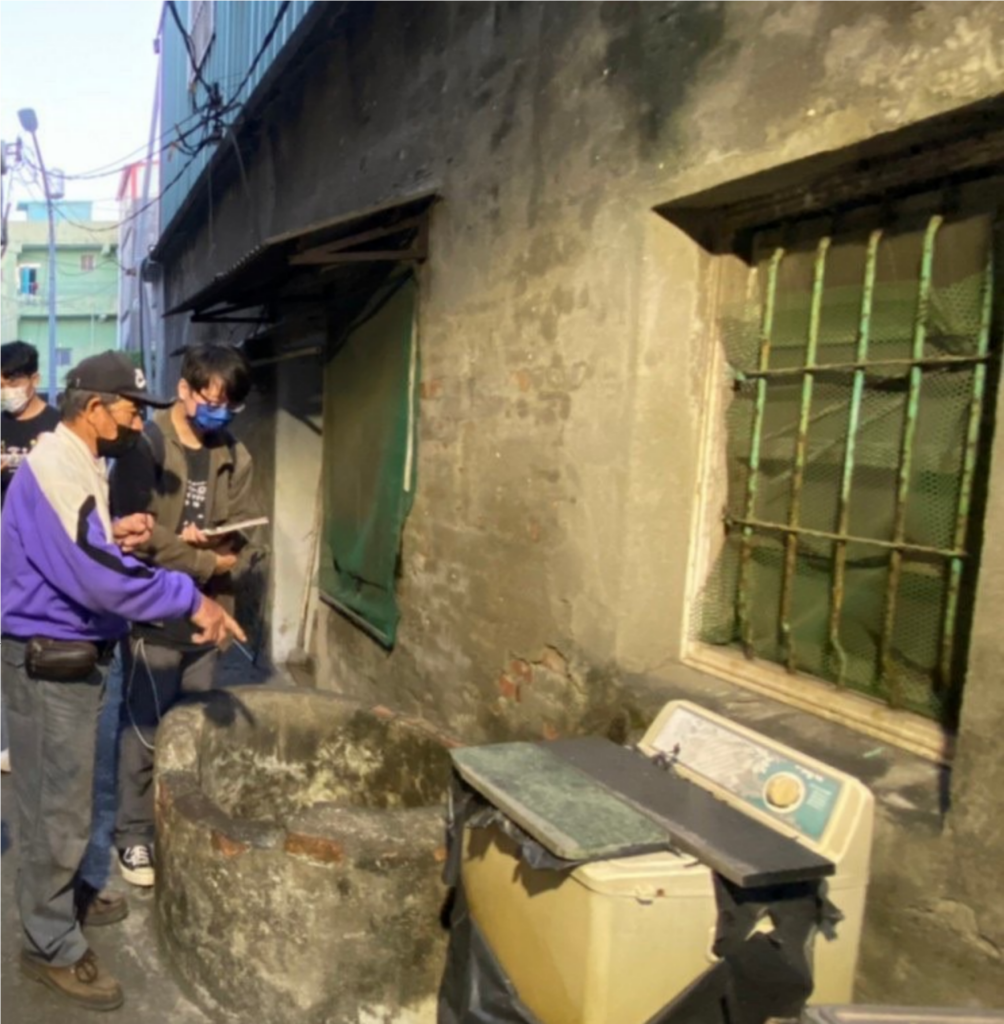
The Ancient Well was once an essential necessity for daily life, providing water for drinking and irrigation. In the local area, there was a special tradition of worshiping the Well Deity, expressing gratitude for the nurturing grace of the ancient well. Although its usage has declined over time, the water level in the well is still maintained to a certain depth. Drawing water successfully requires the skillful technique from the grandpa.
In the past, people used to fetch water from the well at the end of the lane and bring it back home to fill the large earthenware jars for drinking and washing. However, with the widespread availability of piped water, this practice gradually faded away. Nevertheless, the water in the well is groundwater, and the influx of industrial areas has led to its contamination. This could potentially undermine the local culture. Therefore, achieving a balance between the environment, culture, and industrial development is not only a challenge faced by Dalinpu but also a matter of importance for our society as a whole.
The saying “Don’t mind you adding salt to your meals, just mind your ancient well being 18 boxes deep” refers to the difficulty of retrieving water from a well that is 18 boxes deep, each box being approximately 1.6 meters deep, as per Taiwanese dialect.
People would fetch water from the well precisely at noon on the fifth day of the fifth lunar month, a practice known as “Noon Water”. It’s also referred to as “Pure Yang Water”, “Water of Pure Yang”, or “Dragon’s Eye Water”. This tradition has been documented since the Song Dynasty and continues to be observed to this day.
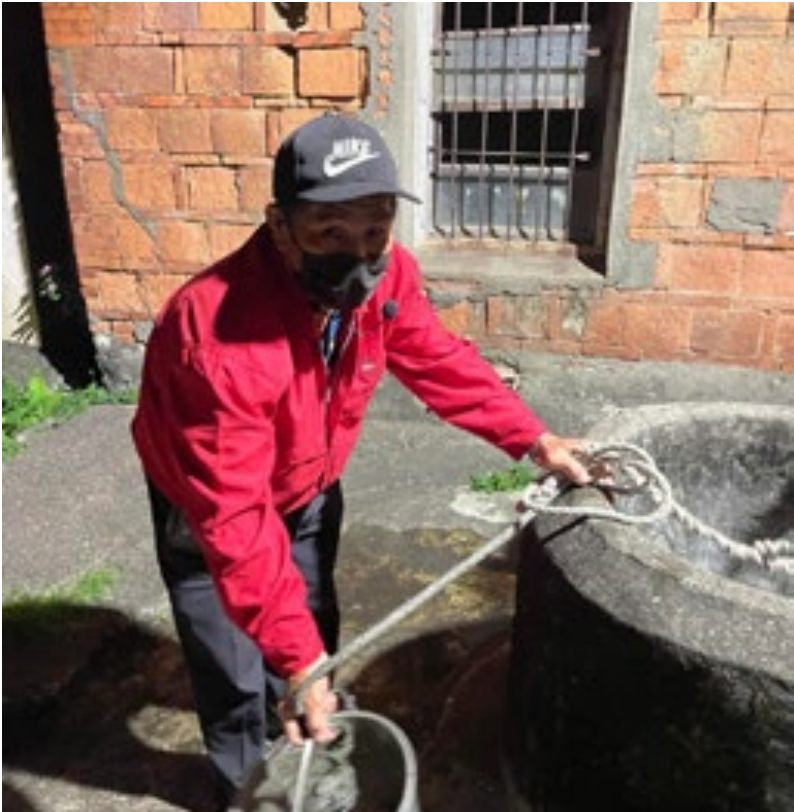
Fetching water from the well is not as easy as one might imagine!
Grandpa Hsu Shun-liang personally demonstrated the method of fetching water from the well:
- Ensure the bucket is empty.
- Slowly lower the bucket into the well until it just touches the surface of the water, and press it against one side of the well wall.
- Lightly lift the bucket and then vigorously swing it in the opposite direction of the well wall to flip it over and submerge it into the water.
- Slowly pull it back up.
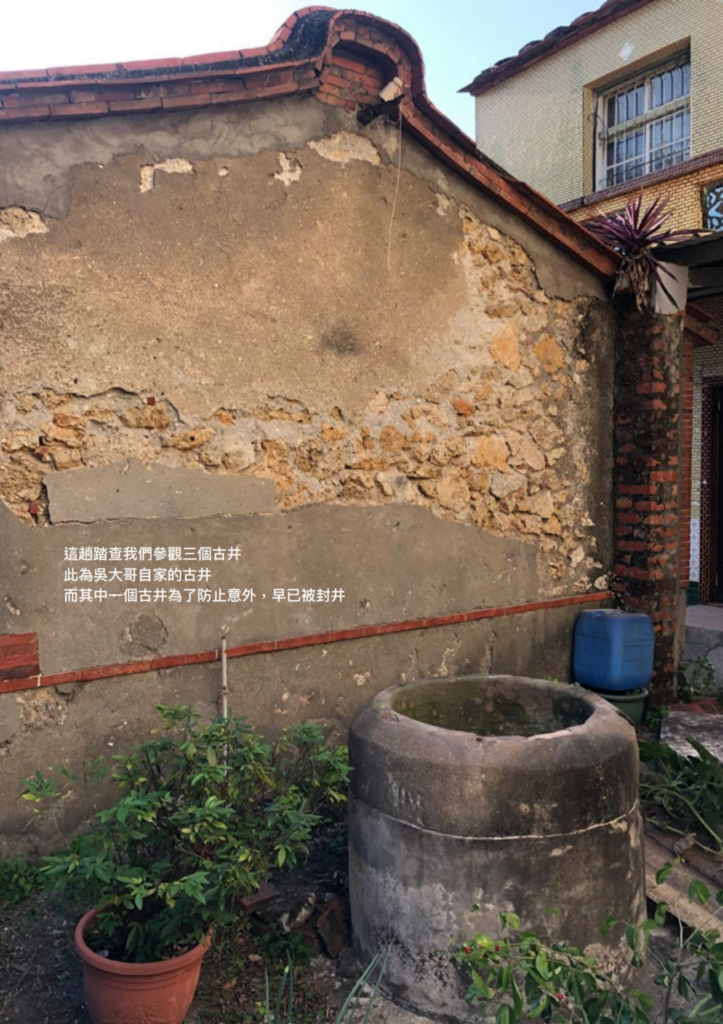
The well holds memories of the grandfather’s many years. When he was a child, he used to fetch water after school to replenish household supply. During weddings, besides the ceremony in the hall, the newlyweds also pay homage at this well. Therefore, besides being integral to the Hsu family’s daily lives, this ancient well is also a symbol of faith for the Hsu family.
Water Source
The farmland in Dalinpu primarily relies on the Dajinpu Canal, a branch of the Cao Gong Old Canal, which was one of the three major canal systems in Taiwan during the Qing Dynasty. It was constructed during Cao Jin’s tenure as the magistrate of Fengshan. Previously, the school also used well water, which was filtered for drinking, as the groundwater in Dalinpu has a high iron salt content, necessitating frequent replacement of filter materials. In the early days, most households had their own ancient wells. Due to poor water quality, a water tower was constructed in Hongmao Port during the Japanese colonial period to provide drinking water for residents, while groundwater was utilized for daily household use. During the grandfather’s military service in Taitung, he noticed that the tap water there tasted different from that in Dalinpu. Taitung’s water was sweet, while Dajinpu’s was salty.
Which well do you see in the streets and alleys?
Please provide the link to the photo in the comments section, and explain what story this well might have in the photo?
Please place the photo in the cloud storage: https://imgur.com/