The City Island Surrounded by Smokestacks: Dalinpu
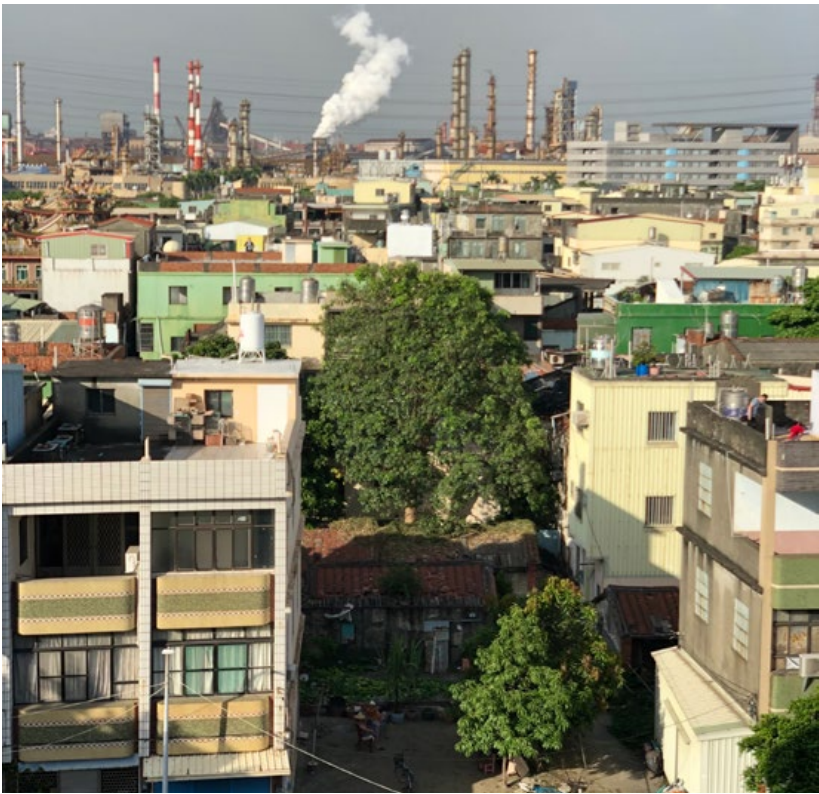
Dalinpu is encircled by factories, each emitting substantial pollution with considerable emissions. Within the industrial zone, there are nearly 500 factories representing over twenty different industries. In addition to these, there are emissions from large trucks and motor vehicles, rendering the air somewhat hazy. As evening falls, the brightly lit scene is not comprised of car headlights or the illumination of skyscrapers and shopping centers, but rather emanates from the brilliance of these factories. Nearby factories and enterprises discharge a significant volume of emissions, subjecting residents to health issues stemming from air pollution.
How to Breathe Daily Amidst the Air Pollution Caused by Countless Smokestacks and Scattered Coal Dust?
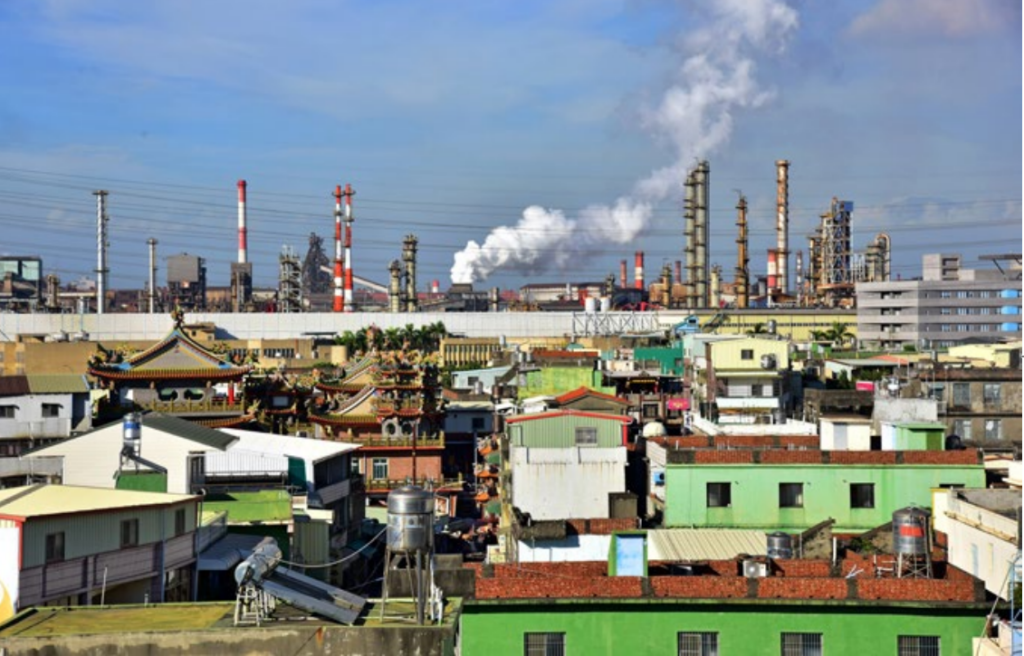
The once azure coast turned into roads, waste dumped by the seashore. The industrial landscape forcibly integrated itself into the daily life of Dalinpu, and the beautiful beaches and lush green rice paddies have vanished. The environmental harm brought about by industrial development has a direct impact on the local residents who endure daily assaults of air pollution. Living in such adverse conditions, they find it difficult to accept that this is their hometown. Today’s desolate Dalinpu is simply incomparable to its prosperous past. The familiar homeland is gradually fading from memory, and as the environment continues to deteriorate, it is profoundly heartbreaking. Yet, they have no authority to do anything for their hometown, a mix of sadness and anger. Unforgettable memories reside only in the hearts of each resident, and they can only pass down the image and beauty of their former hometown through oral storytelling to the next generation.
Local residents passionately share their childhood memories of Dalinpu, their emotions running high and vivid recollections flowing one after another. But under the nation’s development and plans, it gradually transformed into a “trapped landlocked island.” Dalinpu is filled with many old buildings and communities, hundreds of smokestacks emitting pollutants, and the once clear sky has become drastically different from the clean, azure skies of their childhood. From a view of the sea, it has sometimes become a mere glimpse of the sea, if at all. Air pollution has not only failed to improve but has continued to worsen, and land reclamation has pushed the coastline outward, causing coastal bulging. The childhood playgrounds that once hosted music festivals have now become industrial areas and roads. Endless streams of connecting cars and trucks have led to the closure of countless shops. Additionally, there are problems like the accumulation of waste and stray dog gatherings. The harm caused by industrial development has consequently altered the entire community’s cultural and natural landscape. Every resident has fiercely resisted, defending their rights and privileges, but protests have proven ineffective. Residents’ voices have been ignored, and government responses have been inadequate, addressing symptoms rather than the root causes. The issue of environmental pollution has yet to receive appropriate policy solutions.
What Dalinpu Needs to be Prioritized:
- Residents’ Health Issues
- Improvement of Quality of Life
- Preservation of Dalinpu’s Cultural Heritage
- Access to Fresh Air
- Defending Residents’ Housing Rights
- The Health of the Next Generation
- Environmental Sustainable Development
- Inheritance of Local Culture
Can Quality of Life Coexist with Industrial Development? Can They Be Traded?
In this modern age of technology, it is expected that people should live in a conducive environment with basic public amenities like underground or piped water, as well as gas and natural gas supplies. Unfortunately, these are notably absent in Dalinpu. Despite Taiwan’s industrialization over nearly half a century and the advancement of technology, one would have thought that such scenes would only exist within historical landmarks. However, it is disheartening to realize that people today still have to adhere to these traditional ways of life, with no improvement measures or methods provided by the government. The presence of factories should ideally contribute to environmental progress, but instead, their arrival encroaches upon the residents’ right to live in a healthy environment. This has led to population decline, the gradual disappearance of many cultural aspects, and the loss of the area’s former prosperity. Air quality has also deteriorated significantly, posing a serious threat to public health. Breathing fresh air has become a dream for local residents, a stark reversal of priorities.
Breathing fresh air should indeed be a given!
Many of us take it for granted that we can joyfully visit a “clean” seaside and breathe “normal” air, just like people in other areas. However, the reality is different. An increasing number of people are experiencing respiratory-related illnesses due to continuously inhaling polluted air. Many residents suffer from respiratory diseases, with numerous issues arising in their lungs. The proportion of lung cancer cases is steadily rising, revealing that the seemingly harmless hometown is, in fact, quite dangerous. For the residents, Dalinpu is a body scarred and battered. They look at their injured and disabled homeland, reminiscing about its once healthy state, finding solace in those memories. But at the same time, they feel a deep sadness and helplessness, knowing that it can never fully recover. The image of their hometown is indelibly etched in their minds and is an integral part of who they are. Even if it becomes prosperous and convenient, they still feel a sense of melancholy because the scenes from their memories are no longer there, especially considering the destruction that has taken place.
Industrial development is undoubtedly important, but throughout the development process, it’s crucial to consider the health of the environment. The principle of “take from nature, use from nature, and return to nature” should be upheld. This approach ensures that resources are used sustainably and that we maintain a harmonious relationship with the natural world. Unfortunately, the current direction of development in Dalinpu is in serious contradiction to the principles of sustainable development.
Dalinpu was once a thriving area, and many of its inns, hotels, and other shops have disappeared over time. Therefore, the transformation of Dalinpu’s former agricultural, fishing, and commercial industries is crucial. However, nature has been significantly damaged, and the once-thriving wildlife in the area no longer has habitats. The beautiful coastlines and blue skies have gradually vanished. The pollution from the industrial zone has had long-term effects on the region’s biodiversity, and the damage caused is irreversible. In the past, there were many dolphins swimming along the coastline, sea turtles nesting on the shores, and over 200 species of birds. Sadly, due to pollution, these scenes have become a thing of the past.
Long-term residents of Dalinpu have been afflicted with lung adenocarcinoma, lung cancer, and other illnesses related to air pollution. Residents deserve to live in a safe and healthy environment, and the industrial zone must implement protective measures to mitigate environmental pollution. Air quality is paramount to good health, as we all require air and breathe it every day. If the quality is poor or contaminated with dust and pollutants, it not only affects human health but also has repercussions on all organisms in high altitudes or the ocean. It inflicts harm on the entire ecosystem and the food chain.
Culture encompasses the wisdom accumulated by a community from living in a place for an extended period, as well as the various experiences from the past to the future. Through the recording and storage of words and images, culture not only preserves memories but also aids in understanding the teachings of the land on its people.
Air pollution has both direct and indirect impacts on our health and daily lives. The continuous construction of factories without adequate air pollution control measures is a pressing issue. Even more concerning is when environmental agencies dismiss the dark smoke as water vapor.
While economic development is important, the government should also acknowledge the complexity of environmental problems, which are intricately linked to residents’ living spaces and historical memories. Land may be appraised and acquired at a price, but what residents value most is the meaning this land holds in their hearts. Economic growth cannot buy clean beaches, abundant fishing grounds, refreshing southwest winds, the sound of waves under a full moon, boundless blue horizons, and the cultural richness that prosperity brings.
The development of industrial zones and the emissions from factories have severely impacted air quality, causing changes that deeply affect other aspects of life. It is hoped that the government, while pursuing economic development, will not sacrifice the originally clean environment. Without good health, many people’s work motivation is greatly affected. Without a healthy ecological environment, industries like fishing and agriculture also suffer. Although the development of industry has progressed, it has simultaneously sacrificed and lost primary industries.
The tides of the coast, once considered marginal land, have been treated as dumping grounds in many places. There have also been numerous land reclamation projects, with Taiwan’s people striving to reclaim land from the sea, from small coastal areas to the development of industrial zones. This has caused damage to the oceans as well. For instance, the population of the Indo-Pacific humpback dolphins on Taiwan’s west coast has dwindled to about 70 individuals, pushing them to the brink of extinction.