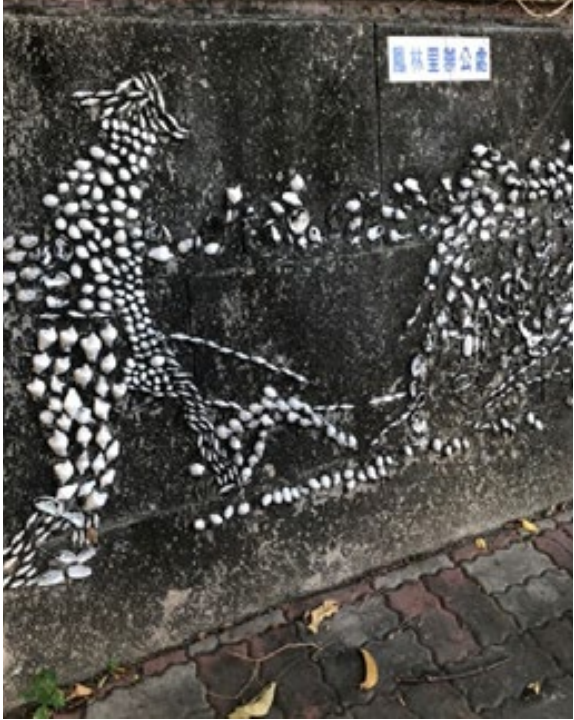
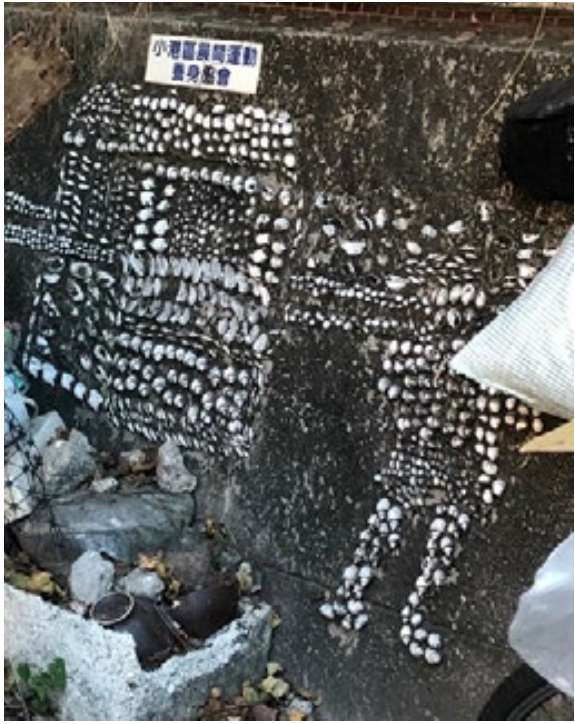
Mr. Hsu Shun-liang guided us through the community’s seashell murals. He recalled that when he was young, the walls were covered with anti-communist slogans. In 1979, when Kaohsiung City was upgraded to a special municipality in Taiwan, the coastal industrial area was not fully developed yet. During the establishment of the school, both the school and the community collaborated to design meaningful murals that preserved the way of life by the sea and farming.
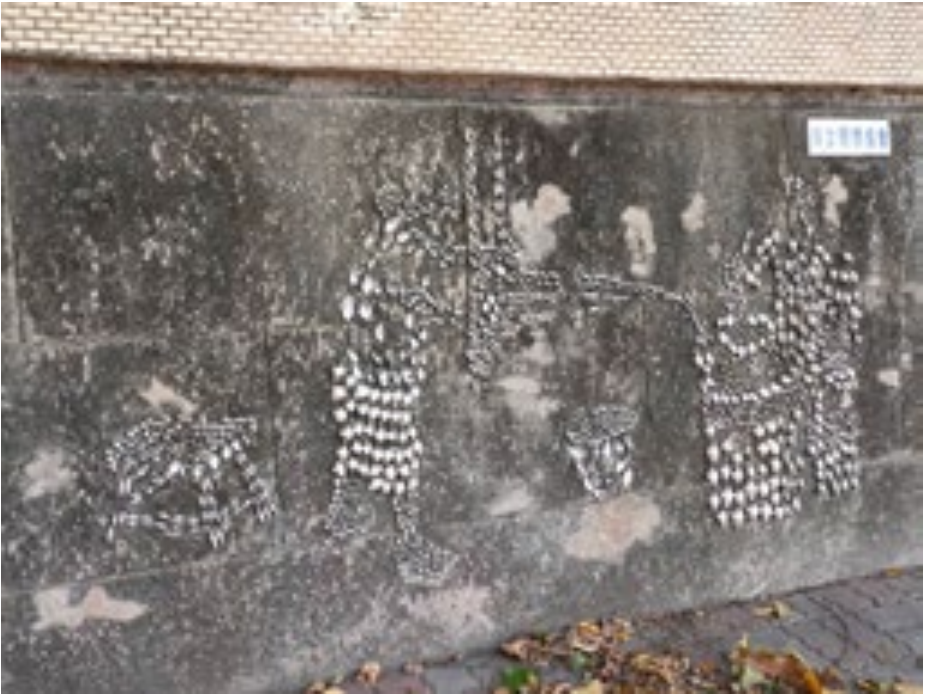
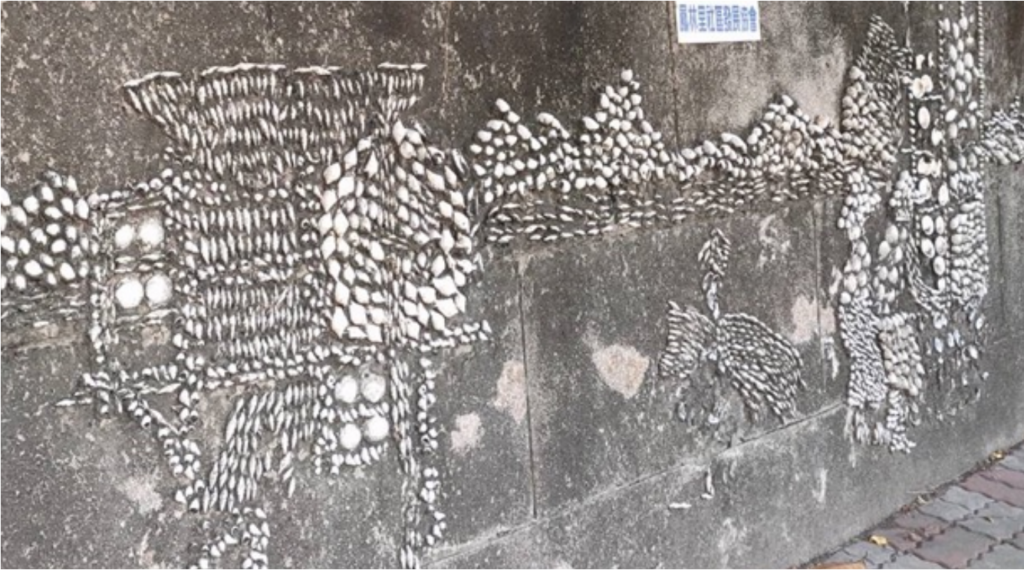
This mural depicts the process of making Red Tortoise Cakes. On the left side, two individuals are seen using a stone grinder to grind the ingredients. During that time, mothers in every household would make Red Tortoise Cakes, and when there were joyous occasions in the family, they would share these cakes with relatives and friends. Mr. Hsu shared that people would secretly compare whose Red Tortoise Cakes were the most delicious, and of course, everyone believed that their own family’s cakes were the winners.
A stone mill consists of two cylindrical stones made of sandstone, used to grind grains such as rice, wheat, and beans into powder. The stone mill typically has two discs, with identical grooves. Usually, the lower disc remains stationary while the upper disc rotates. The upper disc rotates counterclockwise, causing the grains to move from the center outward, resulting in a gradual reduction in particle size.
In larger stone mills, the lower disc is often designed with a slight concave shape, and the central portion may be left without grooves. This design helps facilitate the delivery of materials to the grooves, enhancing the grinding process.
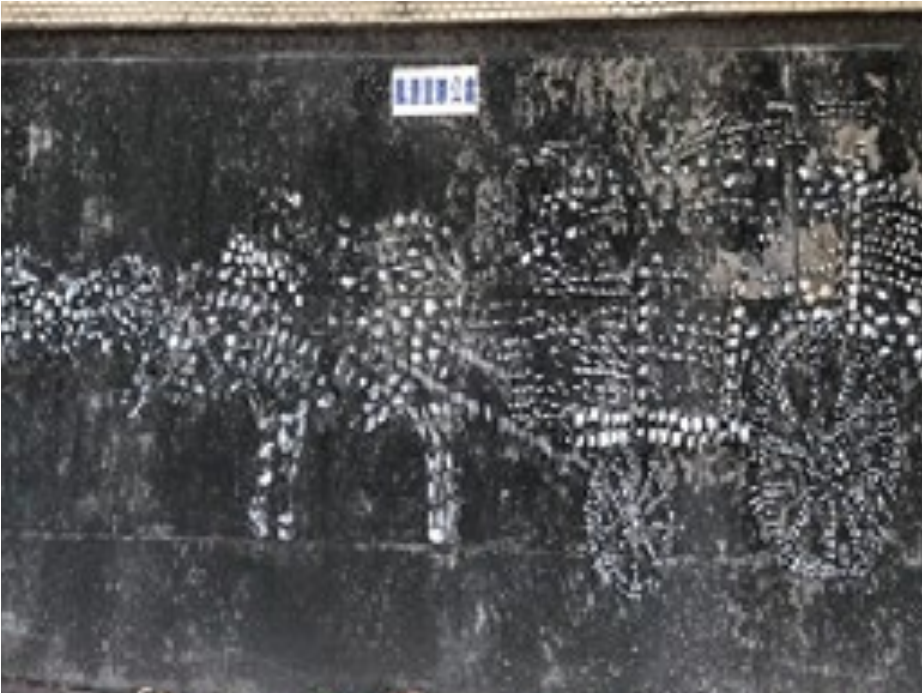
Mr. Hsu was engaged in ox-cart transportation. He only remembers that in the era when he could work, he would go out to work with his family and their ox-cart every day. This was before the year 1971 (before the construction of the Kaohsiung Harbor Tunnel), when ox-carts were essential transportation tools on Qijin Island. At the beginning of the Nationalist government’s relocation to Taiwan, there were numerous shipyards and repair yards on Qijin Island. Mr. Hsu’s ox-cart was used to commute from Dalinpu to Qijin for work.
In addition to relying on the sea, the residents of Dalianpu also depended on agriculture for their livelihoods. This mural depicts ox carts loaded with sugarcane. Mr. Hsu elaborates on horse-drawn carriages and the luxurious lifestyle they represented. During the Qing Dynasty, only wealthy and privileged families, often government officials, could afford grand and opulent residences, similar to the layout of exquisite temples. Government officials were also among the few who owned carriages for transportation. Some of these grand mansions have been preserved as historical tourist attractions today. Dalianpu once produced three successful scholars (jinshi), and it experienced a period of prosperity. Unfortunately, the grand official residences of Dalianpu have since been demolished.
Once known as the “Land of Fish and Rice,” Dalianpu used to be everyone’s impression of the area. However, today it faces the necessity of relocation due to pollution from factors such as heavy industrial development, emissions of pollutants like smoke and waste. What is frustrating is that in other places, such as Nanzih, there are agreements with the government that factories will be shut down if a certain level of pollution is reached, whereas Dalianpu only has the option of relocation. Unfortunately, apart from the initial relocation of the Datong Xin Village, which had good planning, the rest of the area remains unjustly affected even until today.
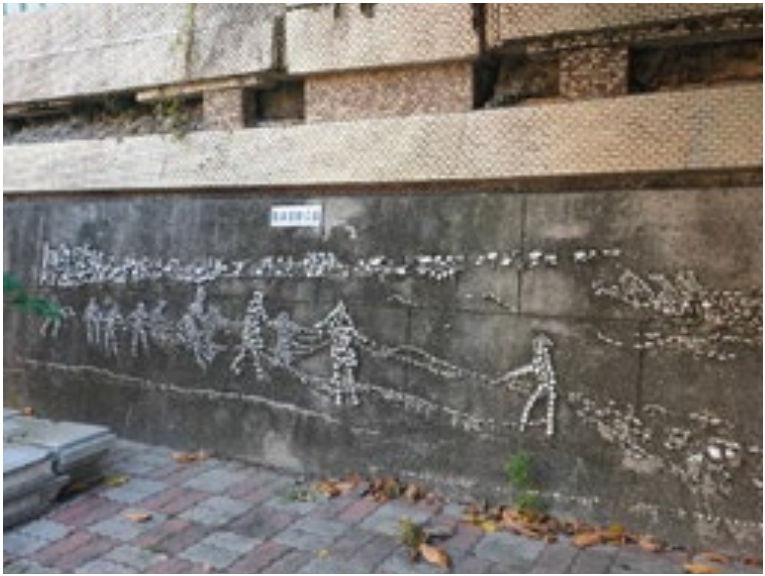
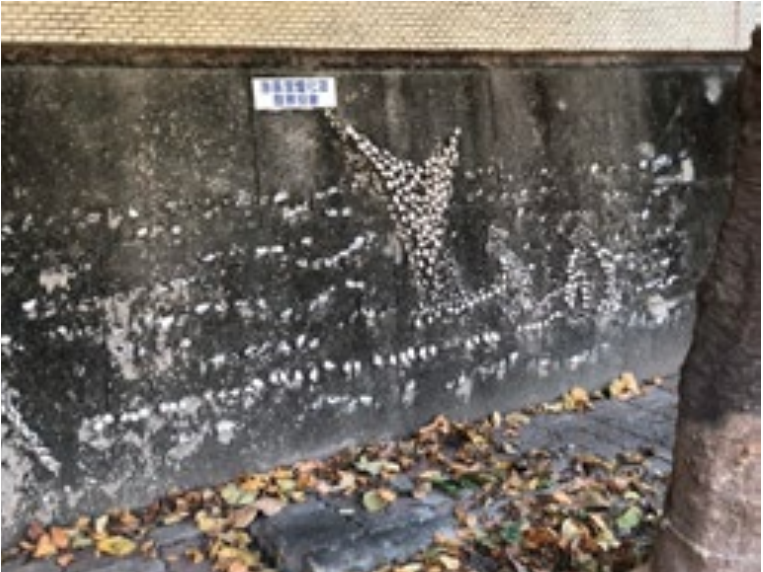
This mural depicts a scene of capturing mullet fish. Mr. Hsu fondly remembers how capturing mullet fish was quite a spectacle because mullets are known to jump. One of the traditional methods for catching mullet fish, locally known as “Tiao-Wu” (in Taiwanese: 跳ㄡㄚ ˋ), involves multiple boats encircling the mullet fish. With no escape route, the mullet fish would jump onto the fishing boats. Over time, there was a gradual shift towards aquaculture, including the cultivation of mullet fish and milkfish fry, in addition to eels.
When the fish are most densely gathered near the shore, a boat is used to release a bottom trawl net into the sea. The two ends of the trawl net are anchored to the shore. Once the fish are enclosed within the net, dozens of people on the shore work together to pull the fishing net back onto the land. In the early days, whenever the fish migration occurred, coastal residents would assign individuals to stand by the sea day and night. When they observed the fish gathering, residents would immediately set out to sea using bamboo rafts or boats and cast a net around the fish in a large circle, encompassing most of the nearshore fish species. Those remaining on the shore would have short ropes ready. When the boats drove the fish into the net, people on the shore would collectively pull the rope to bring the fishing net ashore, and everyone who participated would share in the catch.
The tools used for scooping fish fry are quite simple. Two bamboo sticks are crossed, and a mesh net is attached in the middle, creating a makeshift scoop. Of course, waterproof rubber shoes, protective clothing, and a headlamp to see the fish fry are also essential. When scooping fish fry, individuals stand in the seawater. When the waves come in, they invert the fish net and, using the sand as leverage, sweep it along the edge of the coastline. Then, they raise the net to catch the fish fry and use the headlamp to carefully search for them among the sand and stones. This process involves bending over, lifting, inspecting, and collecting fish fry repeatedly, resulting in a bountiful harvest. However, it can be quite strenuous, as individuals must endure the impact of the incoming waves.
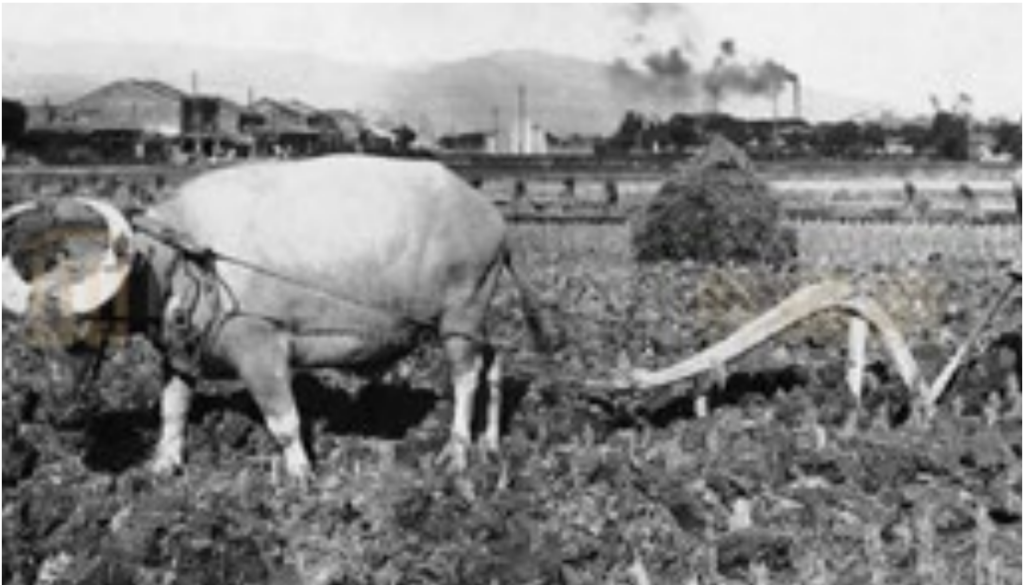
Before the top ten construction projects, there were rice paddies cultivated on the land. However, now the farmland has been expropriated and converted into industrial use. Cattle played an indispensable role and function in traditional rural Taiwanese society, serving as essential labor in rice fields and a livelihood for many families. Since rice requires growth in water-rich, muddy soil, the land needed to be prepared anew after each cultivation.
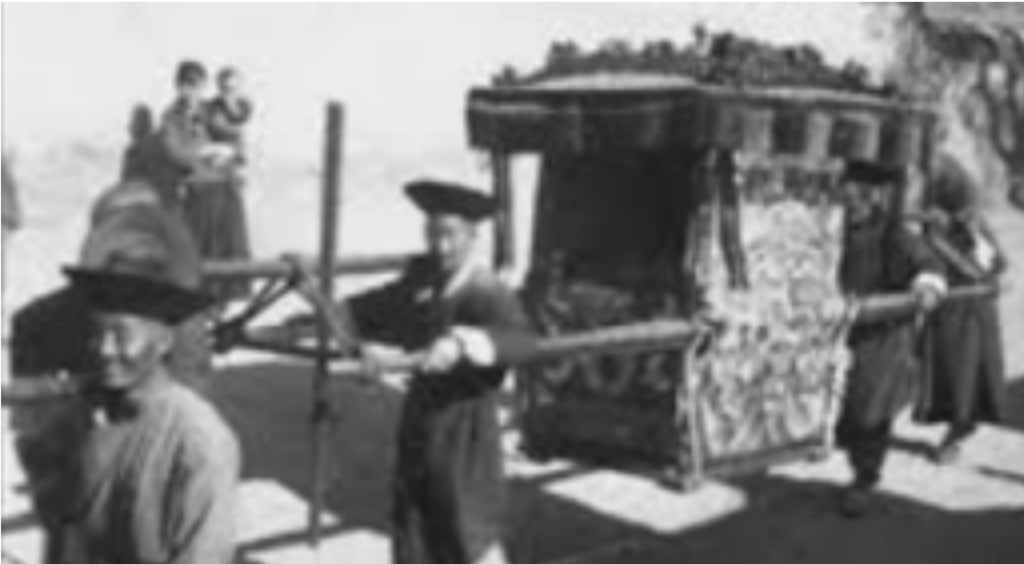
The grand sedan chair symbolized power and wealth, and Mr. Hsu had the honor of sitting in one. In the early days of marriage, when there were no cars or bicycles available, Mr. Hsu’s eldest sister married into a family with the surname Lin in Hongmao Harbor. In ancient times in our country, the customs and rituals of marriage were generally strictly regulated. While some ceremonies might be simplified, the use of the grand sedan chair was absolutely indispensable and could not be omitted.
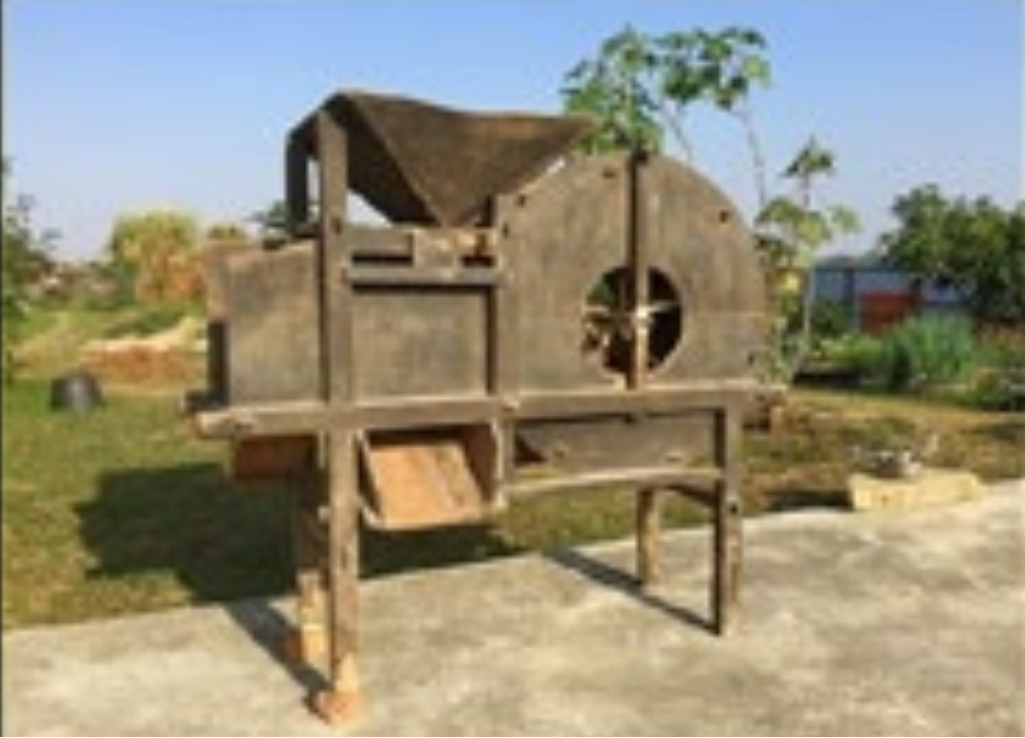
Rice grains are placed into the funnel-shaped entrance, and the windmill box is shaken to blow out stems, leaves, insects, dust, and other impurities. The wind power generated is used to sift out intact, clean, and heavier rice grains.
What story do these shell collages tell?