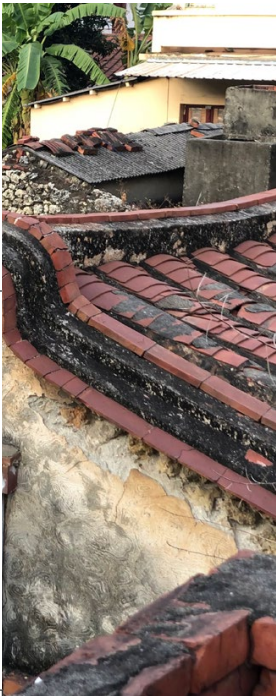
The history of Dalinpu
Dalinpu has been inhabited since 1661, spanning over three centuries. It has evolved from an obscure fishing village into a bustling urban center with a rich street life. However, in recent times, due to the establishment of industrial zones and the outmigration of young people, the local population is now predominantly comprised of elderly residents and children. Additionally, the local economy and property values have rapidly declined due to the environmental damage caused by the industrial areas.
The Pioneer History of Dalinpu
The founders of Dalinpu arrived in the year 1661 during the 15th year of the Yongli era. They came to Taiwan with Zheng Chenggong, the Prince of Yanping, after successfully expelling the Dutch. These pioneers migrated from Zhangzhou Prefecture in Fujian, China. They landed on the western coast near Qieding and began the process of cultivation and settlement.
Originally, Dalinpu was known by various names such as “Da Shu Lin,” “Shu Lin Pu,” and “Da Lin Pu.” The term “Lin” referred to the remaining patches of forest that had not yet been cleared when the immigrants were cutting down trees to create arable land. Due to the diversity of tree species in these areas, there was no specific tree name, and they collectively used “Lin” as the place name. “Pu” referred to overgrown wild fields. Therefore, the name Dalinpu essentially means “a vast area of wild field with thick forests.”
In the 17th year of the Daoguang era, which was in 1837, the county magistrate of Fengshan, Cao Jin, initiated the construction of the Caogong Canal, involving the excavation of a large water pump at the foot of Fengbitou Mountain. This led to superstitious beliefs among the residents of Zhonglinzi and Zhuihangzi, who believed that the flow of dragon veins had been disrupted, resulting in imminent danger. Consequently, they moved to the Dalinpu area for a new settlement. In this new location, they replaced the character “埔” (Pu) with the character “蒲” (Pu), which represents the fragrant herb – Acorus calamus, known for its protective and warding-off properties. Since then, the area has been known as Dalinpu.
Policy Evolution
In 1970, in response to the Ten Major Construction Projects, a coastal industrial zone was established.
➡ Original roads were blocked.
➡ It led to almost twice the travel time due to detours.
In 1980, the Nanshing Plan was implemented.
➡ Land reclamation by filling the sea.
➡ Waste materials were used as fill.
➡ Coastal villages transformed into inland settlements.
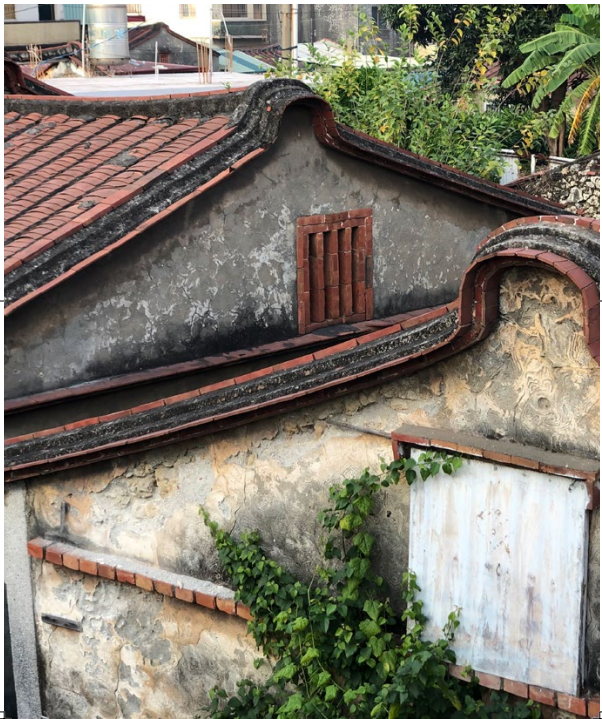
1624-1895: Dutch and Zheng Dynasty Periods, Qing Dynasty Period
🔸 The waters around Dalinpu were known for their abundant fishery resources, particularly for catching mullet.
🔸 The residents of Dalinpu primarily relied on agriculture as their main livelihood, supplemented by fishing.
🔸 It was often referred to as the “Land of Fish and Rice.”
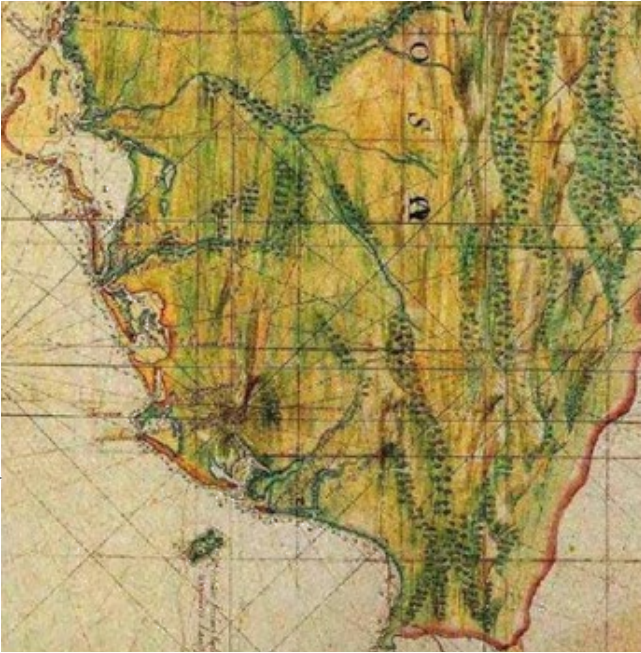
Formosa and the Fishermen’s Archipelago map of southern Taiwan
Dalinpu was not yet fully connected to the main island of Taiwan during the Dutch era, and the unconnected area was known as ‘Hongmao Port.
Source:
- Hand-drawn map by Johannes Vingboons in 1636.
- Zheng Deqing, Kaohsiung Map Collection, Kaohsiung City Government Cultural Bureau, 2004.
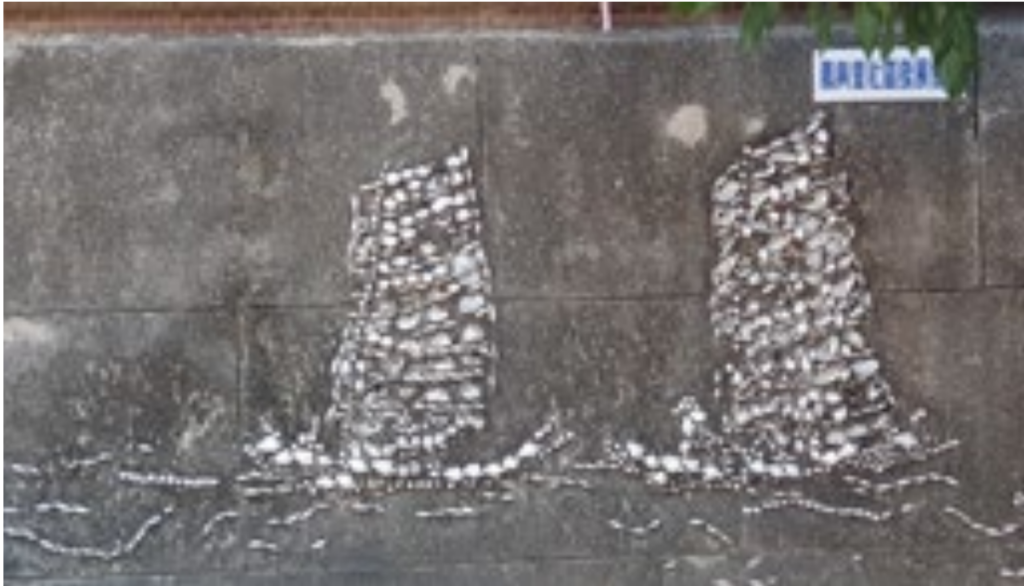
During the Dutch colonial period, Dalinpu had a thriving fishing industry, renowned for its mullet catches. Chinese fishermen along the coast were required to obtain permission from the Dutch East India Company and pay a ten percent fish tax.
In the Zheng Dynasty period, people from Fujian Province, China, arrived with Zheng Chenggong to drive out the Dutch. They settled in this area, engaged in agriculture, cleared land for cultivation, and received encouragement from Zheng Chenggong for agricultural development.
During the Qing Dynasty rule, the area of Dalinpu was originally named “Yanchengtou” due to the presence of the “Laedong Salt Field” during the Qianlong era. In the 1800s, after the area was flooded and relocated, it transitioned to rice cultivation, and the locals referred to it as “Yanchengtian.”
Dalinpu held a significant position in the fishing industry of Fengshan County, being a rich fishing ground. During the summer and fall, various types of fish were caught, while in winter, the focus was on mullet and Spanish mackerel. In the Qing Dynasty period, fishermen who aimed to catch mullet would take boats with dozens of people and nets, a practice referred to as “mullet hunting.”
During the Japanese colonial period:
🔸 Dailinpu Village engaged in winter mullet fishing.
🔸 The Taiwan Governor-General’s Office actively promoted the development of the fishing industry, granting fishing permits to the fishermen of Dailinpu.
🔸 Transitioning from the “Fenglin Fisheries Cooperative” to the “Xiao Gang Village Fisheries Association.”
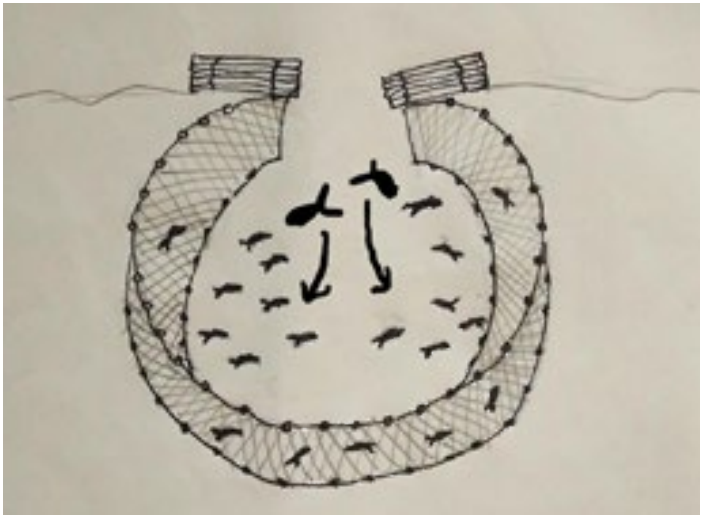
Swing Bell Net: A type of trawl fishing net.
During the Japanese colonial period, in Dailinpu Village, mullet fishing in winter often involved the use of purse seines. When fishermen spotted a school of mullet, they would coordinate the lowering of several bamboo rafts, deploying a trawl net to encircle the school. They would then gradually tighten the encirclement, herding the fish into the purse seine.
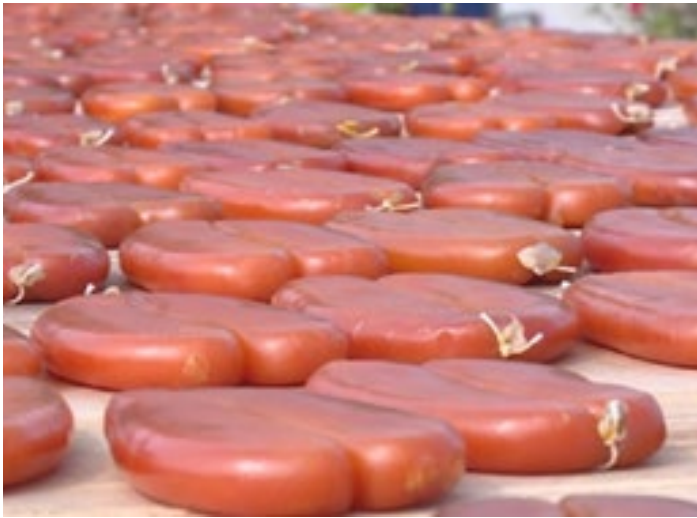
The types of fish caught in Dailinpu include at least seven species: mullet, sharks, sailfish, sardines, triggerfish, black porgy, and red mullet. Among them, the most economically valuable are fish fins and mullet roe, while the highest-priced fish meat is black porgy.
From 1939, after World War II, to the present day:
🔸 Due to its strategic location, it was designated as a heavy industrial area.
🔸 Factories include the Taiwan Power Company’s Dailin Power Plant, the Chinese Petroleum Corporation’s Dailin Refinery, Taiwan Shipbuilding Corporation, and China Steel Corporation.
The Dailinpu area possesses fertile alluvial plains, with its primary traditional industries being rice, sugarcane, sweet potatoes, and nearshore fishing. However, over time, from agriculture and fishing to aquaculture, the traditional livelihoods of Dailinpu have been gradually displaced by industrial developmen
In the beginning, in 1974, the construction of the industrial zone in Dailinpu was welcomed, as it signified the arrival of job opportunities. Therefore, at that time, the villagers were willing to provide their land to the government.